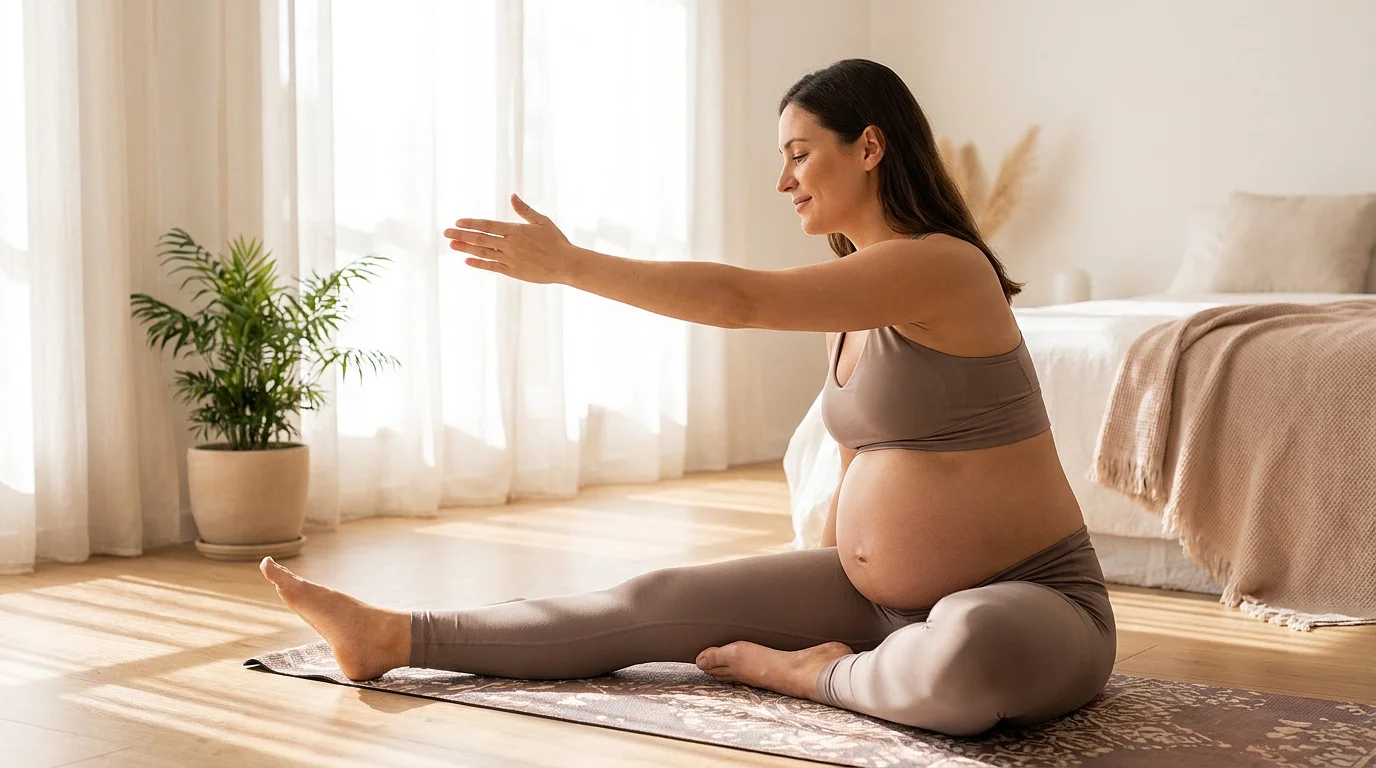
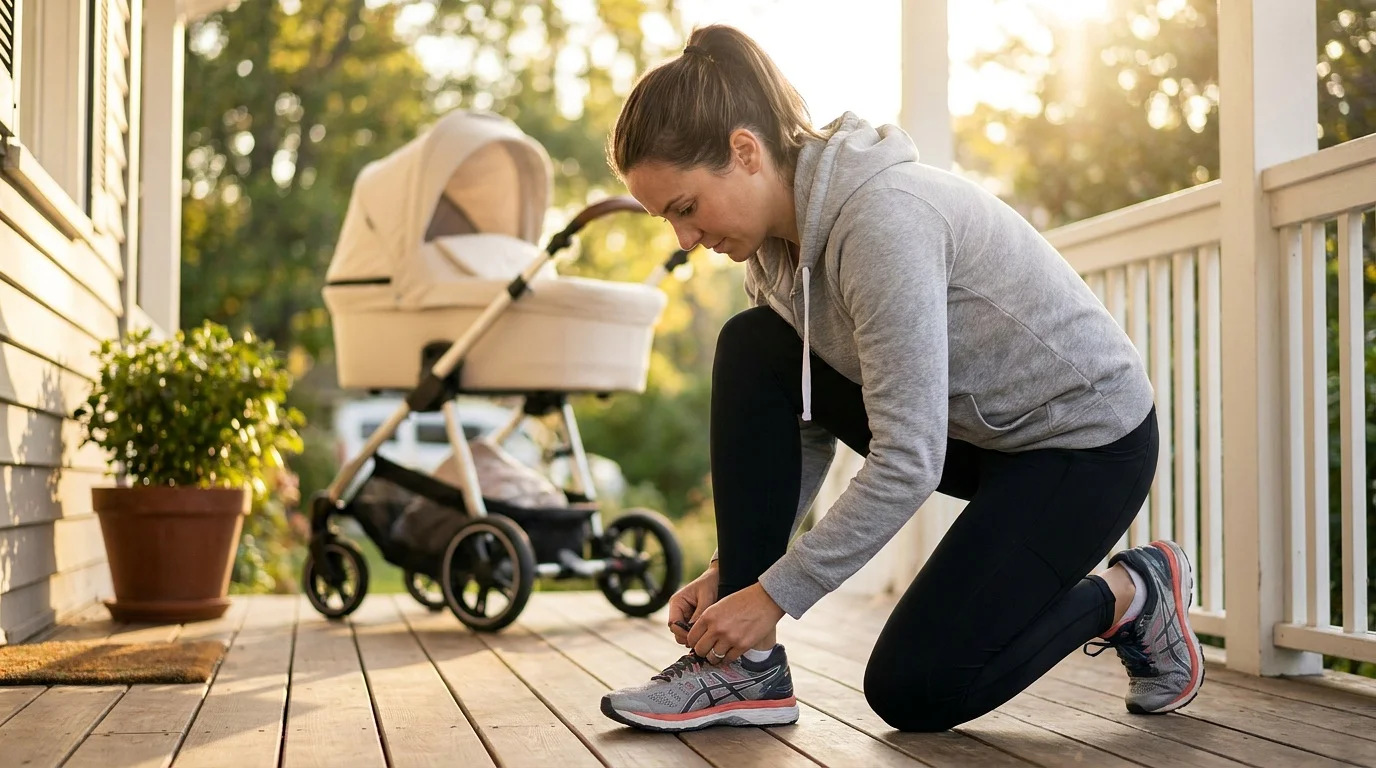
"Is it too late?" That's the question I hear most about C-section scar massage, usually said quietly near the end of a visit, almost like an afterthought. Maybe your baby is now in kindergarten, maybe no one ever showed you how to touch your scar, and now it feels tight, numb, or just a little strange. I want you to know that this is so common, and it is very rarely too late to help a scar feel better.
Why does a C-section scar need any attention at all?
A C-section goes through several layers: skin, fat, the connective tissue over your abs, and the uterus. As each layer heals, the body lays down new tissue, and sometimes those layers stick to each other instead of gliding the way they used to. That's what people mean by a "stuck" scar.
For most people, the scar settles down on its own. For some, it doesn't. In one study that followed 527 women after a C-section, about 18% still had pain at 3 months, 11% at 6 months, and almost 7% at a full year [1]. Most of that pain was mild, but mild pain you live with every day still counts!
What does a "stuck" scar feel like?
These are the things patients describe to me most often:
A pulling or tight feeling when you stand up straight, reach overhead, or roll over in bed
Numbness or a strange tingly feeling around the scar, or skin that feels too sensitive to touch
A shelf or overhang above the scar that doesn't change no matter how much core work you do
Pain with sex, especially with deeper penetration
Low back or pelvic pain that showed up after the birth and never really left
Bladder urgency, or a feeling of pressure low in the belly
A sensation that your low abs are constantly "weak" during exercise
Not every one of these comes from the scar, and that's why I always look at the whole picture, including your pelvic floor, your breathing, and your abs. But the scar is often a piece that no one checked.
When can you start C-section scar massage?
Wait until your incision is fully closed and your doctor or midwife has cleared you, which is usually around your six-week visit. Before that, the APTA Pelvic Health guide for patients suggests gentle steps, like getting used to looking at your scar, touching gently around it, and deep breaths that let your belly move [2].
After that, you build up slowly. Here's the general pattern from that same guide [2]:
Around 4 to 6 weeks: light circles around and on the scar. It may feel sensitive, but it shouldn't hurt.
Around 6 to 10 weeks: press a little firmer, and try gentle holds with a flat hand above and below the scar.
Around 10 to 12 weeks: move the scar in every direction (up, down, side to side, and on the diagonals), and gently lift the skin and roll it between your thumb and fingers.
The guide suggests 5 to 10 minutes, 1 to 3 times a day [2], and in my practice I tell people that a few minutes most days is a great place to start. Full scar healing can take 3 to 12 months [2], so think of this as a gentle habit and not a race.
If your scar is ever red, hot, swollen, or leaking, or if you have a fever, stop and call your doctor, because that needs medical care rather than massage.
What if it's been years?
This is my favorite part to talk about, because the answer is so hopeful. The research on scar work doesn't only include fresh scars. In a multicenter trial, women who already had chronic, stable pain after a C-section got four sessions of soft tissue work on the belly and scar [3]. Their pain, their sensitivity to pressure, their back function, and how well the scar moved all improved, and the gains were statistically significant [3]. It was a small trial with only 28 women and no untreated group, so I hold it loosely, but a review of soft tissue work for belly scars also found moderate evidence that it can ease pain and strong evidence that it improves how well the scar moves [4].
So if your scar is years old, please don't write it off. An older scar may take a bit more patience, and it can absolutely still change. In fact, I had a patient who was 20+ years after her C-section. She came to see me for urinary urgency and frequency. We introduced scar tissue work as part of her plan of care because her scar just would not move well. While it wasn't the only part of her plan of care, it made a huge difference - she regained better movement in her abs, more confidence in fitness classes, and she definitely reduced her urgency and frequency. She went from feeling like her bladder limited everything she wanted to do, and now she can go out without searching for the nearest restroom!
What does scar work look like with me?
At your first visit, I'll ask about your birth, your recovery, and what you feel now. Then I'll gently check how your scar moves in each direction, how sensitive the skin around it is, and how your abs and pelvic floor are working with it. I always go at your pace, and if touching your scar feels like a lot, emotionally or physically, we can start by working around it.
From there, we'll usually combine a few things:
Hands-on work to the scar and the tissue around it
Teaching you how to do it at home, so you're not dependent on me
Breathing and core work, because a scar that moves better still needs a strong, coordinated core around it
Pelvic floor work, if pain with sex, leaking, or pressure is part of your story
If you're still early in your recovery, my post on what to expect from postpartum physical therapy walks through the bigger picture. And if that belly shelf is bugging you, check out how to check for diastasis recti, because the two often go together.
Your scar is part of your story
Your scar is where your baby came into the world, and it deserves care just like the rest of you. Whether you had your C-section six weeks ago or sixteen years ago, there's very likely something we can do to help it feel more like yours again, and I'd love to help!
You can reach Protea Physical Therapy at (909) 265-3584, and I see patients here in Anaheim Hills, serving Orange County. If you'd like to talk it through first, book a free 15-minute discovery call.
This article is for education only and is not medical advice. Please check with your doctor or midwife before you start scar massage, and call them right away if your scar shows signs of infection.
References
Jin J, Peng L, Chen Q, et al. Prevalence and risk factors for chronic pain following cesarean section: a prospective study. BMC Anesthesiology. 2016;16:99. https://doi.org/10.1186/s12871-016-0270-6
APTA Pelvic Health, Pregnancy & Postpartum Special Interest Group. How to Take Care of Your Cesarean Scar (patient handout). 2024. https://www.aptapelvichealth.org/file/secure/How-to-Take-Care-of-Your-Cesarean-Scar.pdf
Wasserman JB, Abraham K, Massery M, Chu J, Farrow A, Marcoux BC. Soft tissue mobilization techniques are effective in treating chronic pain following cesarean section: a multicenter randomized clinical trial. Journal of Women's Health Physical Therapy. 2018;42(3):111-119. https://doi.org/10.1097/JWH.0000000000000103
Wasserman JB, Copeland M, Upp M, Abraham K. Effect of soft tissue mobilization techniques on adhesion-related pain and function in the abdomen: a systematic review. Journal of Bodywork and Movement Therapies. 2019;23(2):262-269. https://doi.org/10.1016/j.jbmt.2018.06.004