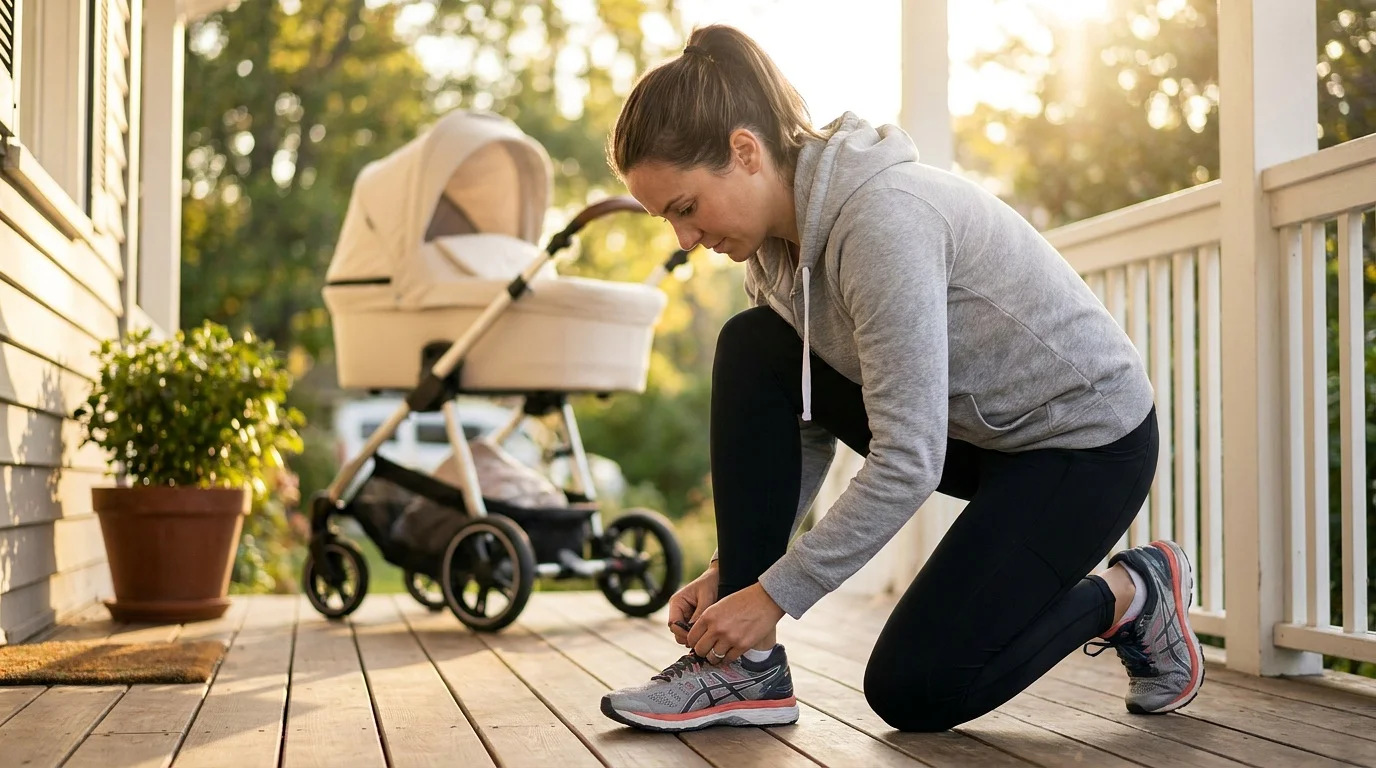
You just grew a human. Your body did something incredible — and now it feels like it doesn't quite belong to you anymore.
Maybe you're leaking a little when you sneeze. Maybe things feel heavy "down there." Maybe getting back to exercise feels impossible, or sex is painful in a way no one warned you about. Postpartum physical therapy can help with all of that — and it's a lot less intimidating than it sounds.
Why Does This Even Matter?
Here's something that frustrates me: postpartum care in the U.S. often boils down to one six-week checkup and a "you're cleared, good luck!" That's it. Six weeks to recover from one of the most physically demanding things your body will ever do.
The American College of Obstetricians and Gynecologists (ACOG) actually recommends assessing pelvic floor function as part of comprehensive postpartum care [1]. But the reality? Most people aren't referred to a pelvic floor therapist unless they actively ask for it.
Your pelvic floor muscles just spent months supporting a growing baby. Whether you delivered vaginally or via C-section, those muscles were under significant load — and they deserve proper rehab, just like you'd rehab a knee after surgery.
When Should You Start?
The short answer: it depends. But here's a general framework.
Pelvic floor exercises (gentle ones — we're not talking boot camp) can actually start in the immediate postpartum period [2]. Within the first two weeks is a great time to start doing relaxation exercises, gentle mobility work from your hips through your back, and relearning breathing now that there's not a baby bump pushing on your lungs! From there, movement can build, keeping your personal journey in mind.
A full evaluation is usually best around 6-8 weeks postpartum, once you've had some initial healing time. But if you're dealing with significant symptoms — persistent pain, a feeling of heaviness or pressure, or urinary issues that aren't improving — don't wait. Call sooner.
And this is important: C-section moms need this too. Your pelvic floor still carried your baby for months. The delivery method changes what we focus on (scar tissue work becomes a bigger piece), but it doesn't change whether you need support.
What Happens at Your First Visit?
I know the idea of a pelvic floor evaluation sounds intimidating, but my goal is always to keep comfort the #1 priority. Let's walk through it.
Your first appointment is usually about 55 minutes. We'll spend some time just talking — your pregnancy, your labor and delivery, what symptoms you're experiencing now, what your daily life looks like. I want to understand your full picture, not just your pelvic floor.
Then we'll look at how you move. How you breathe, how you carry your baby, how you get up and down. You'd be surprised how much information I can get from watching you do everyday movements.
The internal exam is a part that makes a lot of people nervous — and that's completely okay. If you're comfortable having it assessed, we'll assess your pelvic floor muscles for strength, tone, and coordination. Can you contract them? Can you release them? (That second part is just as important.) But here's the thing: you're always in control. We go at your pace, and you can stop at any time. If you're not sure about this step, that's ok too! We can look at your hips and core and address many concerns this way as well.
By the end of that first visit, you'll have a clear picture of what's going on and a plan for getting you back to feeling like yourself.
What Does Treatment Actually Look Like?
If you've been told "just do Kegels", let me promise you, that's not the full picture. Kegels can be a helpful tool, but they are actually part of a system.
Postpartum pelvic floor therapy usually includes a mix of:
Pelvic floor muscle training — yes, strengthening, but also learning to relax. A lot of postpartum issues come from muscles that are too tight, not too weak.
Core and trunk stabilization — rebuilding the connection between your deep core, your pelvic floor, and your breathing [3].
Posture work — because feeding a baby 8-12 times a day does a number on your neck, shoulders, and back.
Scar tissue mobilization — for perineal tears or C-section incisions. This can make a huge difference in comfort and mobility.
Daily habit strategies — how you're sitting on the toilet, how you're lifting your baby, how you're getting out of bed. The small stuff matters.
Return to Exercise — do you have specific exercise goals? We'll develop a plan to get you back to them safely, and in many cases, stronger than you expected.
How Long Does This Take?
Most of my clients start noticing real changes within 3-4 sessions — better bladder control, less pain, a stronger core. But everyone's timeline is different.
A typical course of care might be 8-16 sessions over a few months, depending on what we're working on. Research shows that structured postpartum rehab programs significantly improve pelvic floor function and reduce symptoms like incontinence [4].
And one thing I always tell my clients: sleep matters more than you think during this process. Your body heals when you rest. I know that's easier said than done with a newborn — but even small improvements in sleep quality can support your recovery.
You Deserve More Than "Just Give It Time"
Leaking when you laugh is common. Pain during sex is common. Feeling disconnected from your body is common. But common doesn't mean you have to live with it.
Postpartum physical therapy isn't a luxury — it's care you deserve. Your body did something extraordinary, and it deserves real, thoughtful support as it recovers.
If you're ready to take that step, I'd love to help. Give us a call at 909-265-3584 — we're in Anaheim Hills, and we'll figure this out together.
References
ACOG — Optimizing Postpartum Care
ACOG — Physical Activity and Exercise During Pregnancy and the Postpartum Period
PMC — Advancements in Postpartum Rehabilitation: A Systematic Review
PMC — Maximizing Recovery in the Postpartum Period