
Pelvic Health
Hip Pain and the Pelvic Floor: 3 Signs They're Connected
Hip pain that keeps coming back isn't always the hip. A pelvic floor PT in Anaheim Hills explains 3 signs your pelvic floor is involved, and what helps.
7 min read
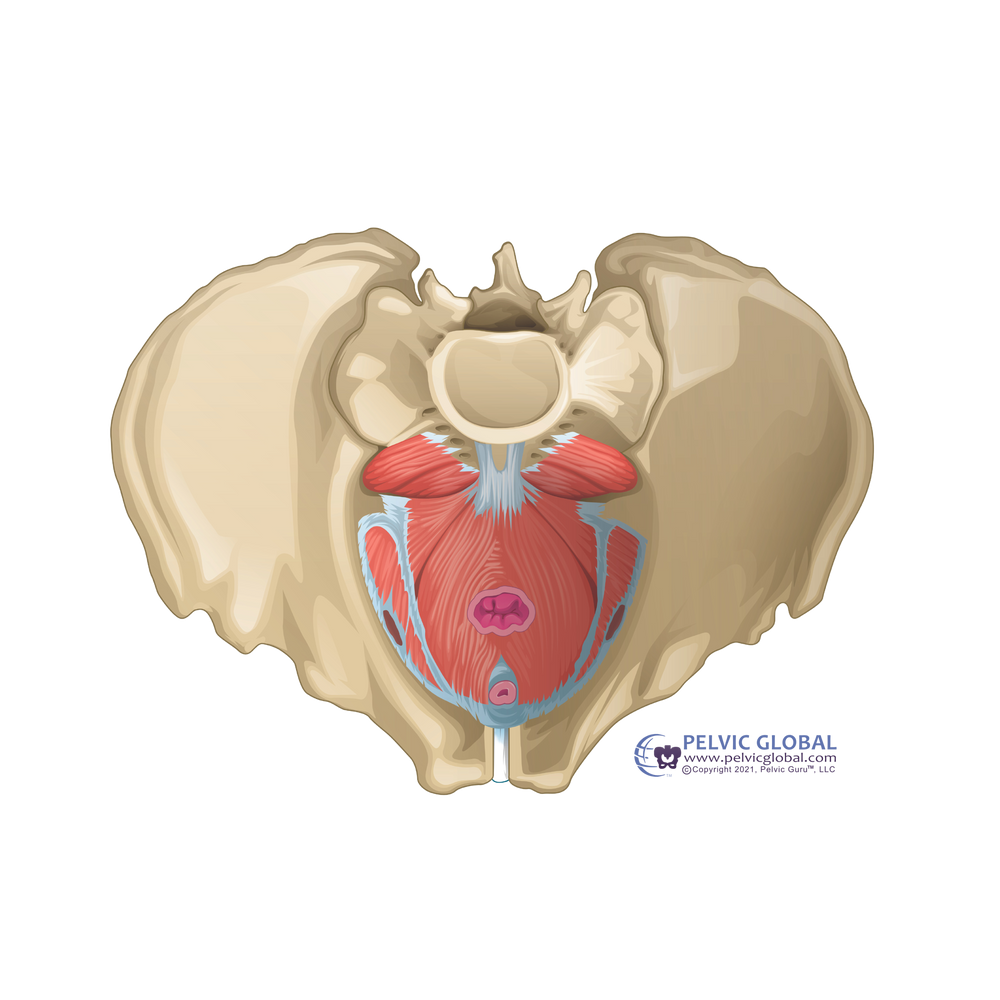
Pelvic floor physical therapy is one of the most quietly powerful specialties in healthcare — and one of the least talked about. As a pelvic floor PT, my job is to understand the muscles, ligaments, joints, and nerves of the human body and how they all work together so you can live without pain or limits. The pelvic floor is no different. It just happens to live in a part of the body most of us were never taught to talk about.
I'm Lesley Rivera, PT, DPT, a pelvic floor physical therapist in Anaheim Hills. Here's what pelvic floor physical therapy actually is, who it helps, what the evidence says, and what to expect when you walk through the door.
Your pelvic floor is a basket of muscles at the base of your pelvis that does a lot more than most people realize. Every day, all day, it is quietly working in the background.
It is a trampoline, gently supporting your bladder, uterus, and rectum.
It is part of your core, working with your hips, abdominals, and back to keep you stable.
It is strong — closing sphincters and helping you maintain bowel and bladder control.
But it also relaxes and lengthens so you can release your bowels and bladder when the time is right.
It is part of your sexual health, using a quiet dance of relaxation and strength to help you feel good.
And it is part of your body's pump system, helping with circulation and blood flow.
When the pelvic floor is too weak, too tight, or just not coordinating well, the symptoms show up in places you might never connect back to your pelvis — leaks, pain, pressure, constipation, "off" sensations, even back, hip, and tailbone pain.
Pelvic floor physical therapy is a specialty within PT focused on retraining these muscles. We use a mix of education, hands-on manual therapy, biofeedback, breathwork, and individualized exercise to help your pelvic floor do its job again [1][2]. It is not a one-page Kegel handout. (Please put the Kegel handout down. We'll come back to that.)
A lot more people than you'd guess. Some of the symptoms I see most often:
You leak urine when you sneeze, laugh, run, or jump
You suddenly have to find a bathroom and barely make it
You strain to poop, or feel like you never finish
Sex hurts, or you've stopped having it
You feel pressure or heaviness, like something is "falling out"
Pain in your low back, hips, or tailbone that nothing else has fixed
You're recovering from pregnancy, birth, or surgery and just don't feel like yourself
And every gender can struggle with their pelvic floor. Our anatomy actually has more in common than most people realize. All genders can experience urinary leaking or incontinence. We can all experience pain with sex or difficulty with orgasm. We can all struggle with chronic low back, hip, or tailbone pain. Pelvic floor PT is for all of us.
Stress, urge, and mixed urinary incontinence
Pelvic organ prolapse [3]
Chronic pelvic pain and painful sex (dyspareunia) [4]
Vaginismus
Postpartum recovery, including diastasis recti and what to expect from postpartum physical therapy
Pregnancy-related pelvic girdle and low back pain
Constipation and bowel control issues — yes, we really do talk about poop
Men's pelvic floor concerns, including post-prostatectomy incontinence and chronic pelvic pain syndrome
Painful or heavy periods that involve pelvic muscle tension — see also help for painful periods
If any of that list made you nod, you are exactly who pelvic floor physical therapy is for.
Short answer — yes, and the evidence keeps getting stronger.
A 2024 meta-analysis in the British Journal of Sports Medicine pooled 65 studies and over 21,000 participants and found that pelvic floor muscle training in the first year postpartum reduced the odds of urinary incontinence by about 37 percent and pelvic organ prolapse by about 56 percent [5]. That is not a small number.
For stress urinary incontinence in women, the most recent Cochrane review (2024) and the International Consultation on Incontinence both rate pelvic floor muscle training as a Grade A, first-line treatment [6].
For painful sex, a 2023 systematic review and meta-analysis in BMC Women's Health found that physical therapy interventions — including manual therapy, biofeedback, and pelvic floor muscle training — produced significant improvements in pain and quality of life in women with dyspareunia [4].
For vaginismus, a 2025 systematic review and meta-analysis reported pelvic floor physiotherapy success rates of around 85 percent [7].
For men, the brand-new 2025 American Urological Association guideline on male chronic pelvic pain syndrome puts pelvic floor PT front and center as first-line care [8]. And recovery after prostate surgery? Pelvic floor muscle training plus biofeedback improves continence at 1 to 6 months post-op [9].
This is one of the most evidence-supported areas of physical therapy. It just doesn't get the spotlight it deserves.
We take a comprehensive view of how you feel and how you move. The work spans a few areas.
We want to understand you. It goes beyond your symptoms. We want to know how you feel about your health, your medications, your diet, how well you sleep, what you do for self-care. We want to know it all.
And don't hold back — while it can feel strange at first to talk about your sexual health or your bowel movements, we talk about it all day long. It's our job. Trust me, we've likely heard it before.
We do an in-depth assessment of how you move in everyday activities — how the joints are functioning, where you need more flexibility, where you need more stability, how the body is coordinating its movement.
This part of the assessment often includes palpation — using touch to feel what's happening and how to address it. The pelvic floor muscles live inside the pelvis, so the most direct way to assess them is an internal exam, vaginally and/or rectally [1][10]. It is nothing like a pap smear. It does not use a speculum. It is slow and gentle, and you are in charge — you can pause, stop, or skip the internal portion entirely [10]. We can build a full plan of care without one if that is what you need.
We discuss and assess your breathing — the foundation of all movement.
We discuss and assess your rest — from daytime relaxation through sleep, a key (and often ignored) part of healing.
We use many techniques to optimize how you move and feel.
Manual therapy and mobility — to give you back freedom of movement.
Strengthening — to bring stability where it's needed, when it's needed.
Coordination training — so your body can balance strength and flexibility automatically, the way it was designed to.
Breathwork and relaxation — the pelvic floor is closely tied to how you breathe, and we work on functional rest, stress management, and sleep so the nervous system can actually settle.
Biofeedback — a sensor that lets you see your muscle activity on a screen in real time, so you can feel what you couldn't feel before.
Chronic pain education — when pain has been around a long time, the body and the brain need different tools. We provide support and resources for reprocessing, healing, and the emotional side of long-term pain.
Probably not — and for some people, you should not be doing them at all.
This is one of the biggest misconceptions about pelvic floor PT. Kegels strengthen the pelvic floor, but not every pelvic floor needs strengthening. Plenty of pelvic floors are too tight, not too weak, and Kegels in those bodies make symptoms worse, not better.
The 2022 American Urological Association guideline for interstitial cystitis and bladder pain syndrome explicitly tells clinicians to AVOID Kegel-style strengthening in those patients and to use manual pelvic floor therapy instead [11].
That is the whole point of seeing someone who specializes in this. Your treatment is built around what your pelvic floor actually needs, not a generic protocol from the internet.
Most people work with a pelvic floor PT for about 8 to 12 weeks, with one or two sessions a week [1]. Some people feel a real change in 3 to 4 weeks. Others need longer, especially with chronic pain or after surgery.
Your home exercise program is what makes or breaks the timeline. Showing up once a week and doing nothing in between is a slow road. Doing your homework, even imperfectly, is the fast one.
Long-term pelvic floor health is a key part of your overall health and wellness, and I am grateful for the chance to share your journey.
If anything in this article hit close to home, the first step is easy. and let's see if pelvic floor physical therapy is the right fit for what you're dealing with.
Call or email anytime with questions. We look forward to working with you.
This article is for general education and is not medical advice. Please consult a healthcare provider for guidance specific to your situation.
Johns Hopkins Medicine. Pelvic Floor Therapy. https://www.hopkinsmedicine.org/health/treatment-tests-and-therapies/pelvic-floor-therapy
Cleveland Clinic. Pelvic Floor Dysfunction. (Reviewed 2023.) https://my.clevelandclinic.org/health/diseases/14459-pelvic-floor-dysfunction
American College of Obstetricians and Gynecologists. Pelvic Support Problems FAQ. https://www.acog.org/womens-health/faqs/pelvic-support-problems
Fernández-Pérez P, et al. Effectiveness of physical therapy interventions in women with dyspareunia: a systematic review and meta-analysis. BMC Women's Health, 2023. https://bmcwomenshealth.biomedcentral.com/articles/10.1186/s12905-023-02532-8
Davenport MH, et al. Impact of postpartum exercise on pelvic floor disorders and diastasis recti abdominis: systematic review and meta-analysis. British Journal of Sports Medicine, 2024. https://pmc.ncbi.nlm.nih.gov/articles/PMC12013572/
Hay-Smith J, et al. Comparisons of approaches to pelvic floor muscle training for urinary incontinence in women. Cochrane Database of Systematic Reviews, 2024. https://www.cochranelibrary.com/cdsr/doi/10.1002/14651858.CD009508.pub2/full
Vaginismus treatment: a systematic review and meta-analysis of contemporary therapeutic approaches. PubMed, 2025. https://pubmed.ncbi.nlm.nih.gov/41148166/
American Urological Association. Male Chronic Pelvic Pain Guideline (Parts I & II). Journal of Urology, 2025. https://www.auanet.org/guidelines-and-quality/guidelines/male-chronic-pelvic-pain
Urinary incontinence rehabilitation after radical prostatectomy: systematic review and network meta-analysis. Frontiers in Oncology, 2024. https://www.frontiersin.org/journals/oncology/articles/10.3389/fonc.2023.1307434/full
APTA Pelvic Health. What to Expect During Pelvic Health Physical Therapy. https://www.aptapelvichealth.org/info/what-to-expect-during-pelvic-health-physical-therapy
American Urological Association / SUFU. Diagnosis and Treatment of Interstitial Cystitis / Bladder Pain Syndrome (2022 Guideline Update). https://www.auanet.org/guidelines-and-quality/guidelines/diastance-and-treatment-interstitial-of-cystitis/bladder-pain-syndrome-(2022)
Ready to Feel Better?
Book a free discovery call to learn how pelvic floor therapy can help you reclaim comfort, confidence, and quality of life.
Talk to Lesley, FreeNewsletter
Get the latest pelvic health tips, insights, and resources delivered straight to your inbox.
No spam. Unsubscribe anytime.
Keep Reading
Hip pain that keeps coming back isn't always the hip. A pelvic floor PT in Anaheim Hills explains 3 signs your pelvic floor is involved, and what helps.

Painful tampon insertion is common, and it is not in your head. A pelvic floor PT walks through the three usual reasons it happens and what treatment actually looks like.

Endo belly is not just gas. Here is what drives endometriosis bloating, why your diaphragm and pelvic floor are part of it, and what you can try this week.